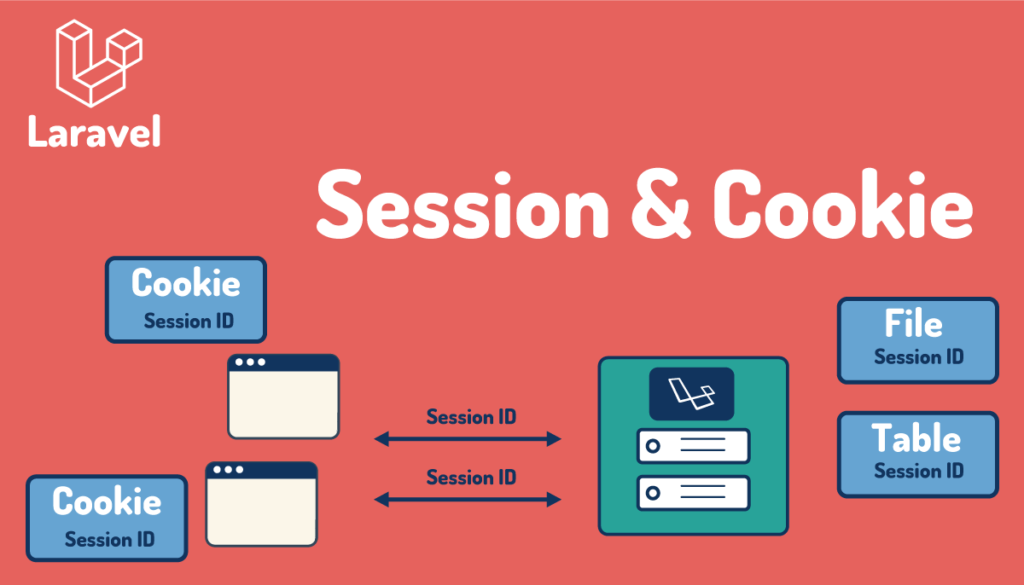
Laravel, a popular PHP framework, provides robust session handling capabilities that enable developers to manage user data throughout a user’s interaction with a web application. In this blog post, we will explore the fundamentals of handling sessions in Laravel, including session initiation, data storage and retrieval, and removal of session data. Understanding Laravel sessions is crucial for building dynamic and personalized web applications.
How to handle session in Laravel
In Laravel, handling sessions is straightforward due to its built-in session management features. Laravel uses a session driver to store and retrieve session data. The default session driver is typically set to the “file” driver, which stores session data on the server’s file system. However, Laravel also supports other drivers such as “database,” “cookie,” and “redis” for greater flexibility.
What is a session in Laravel, and why is it important?
A session in Laravel represents the storage mechanism used to persist user-specific data across multiple requests. It allows developers to maintain stateful information for each user, such as authentication status, user preferences, shopping cart contents, and more. Sessions are essential for creating personalized and interactive web applications by storing temporary data that is accessible throughout a user’s browsing session.
How do you start a session in Laravel?
Starting a session in Laravel is effortless. By default, Laravel automatically starts a session for every incoming request. However, you can manually start a session using the start() method from the Illuminate\Support\Facades\Session facade. This method initializes the session and generates a unique session ID for the user.
How do you store data in the session?
Storing data in the session is a common requirement when building web applications. Laravel provides a convenient syntax for adding data to the session. You can use the put() method from the Session facade to store data in the session. For example, Session::put('key', 'value') stores the value ‘value’ with the key ‘key’ in the session.
How do you retrieve data from the session?
Retrieving session data is as simple as storing it. Laravel offers several methods for fetching data from the session. You can use the get() method from the Session facade to retrieve the value associated with a specific key. For instance, Session::get('key') returns the value associated with the key ‘key’ in the session.
How do you remove data from the session?
Removing data from the session is necessary when you want to clear specific session values. Laravel provides the forget() method from the Session facade to remove data from the session. By using Session::forget('key'), you can delete the value associated with the specified key from the session.
